
White Noise Generator for Sleeping
Steady background sound can mask traffic, snoring and noisy neighbours and help many people fall asleep. This generator makes white, pink and brown noise and gentle rain, fan and ocean sounds live in your browser. Adjust the volume and tone, set a sleep timer that fades out gently, and download a one-minute loop to play on other devices.
- Free to use
- No sign-up
- Runs in your browser
Sleep noise generator
Better Sleep Printables
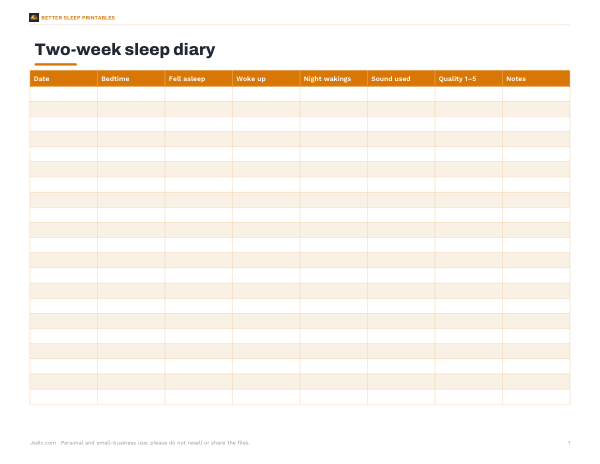
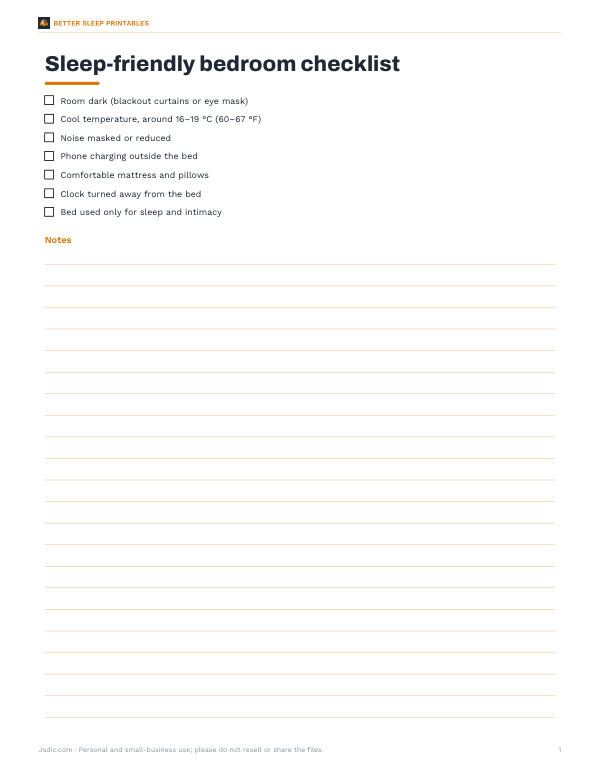
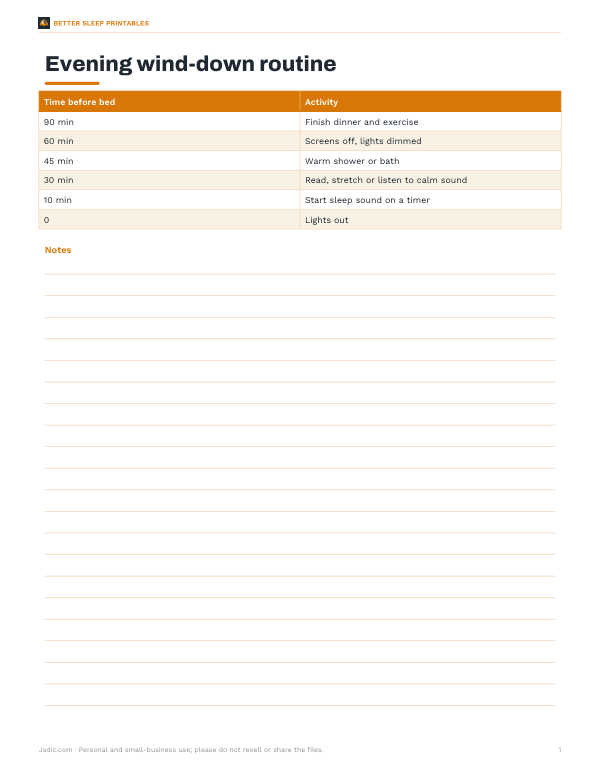
Printable sleep toolkit: a two-week sleep diary (PDF and Excel with averages), a bedroom sleep environment checklist, a wind-down routine planner and a caffeine cut-off tracker.
- Sleep diary (PDF/XLSX)
- Bedroom checklist (PDF, DOCX)
- Wind-down planner (PDF, DOCX)
- Caffeine tracker (PDF, XLSX)
Formats: PDF, XLSX, DOCX. Instant download after payment (link valid 72 hours, up to 5 downloads). AI-assisted: the templates were drafted with AI help and reviewed and laid out before publishing.
$3.00 USD, one-time 4 files · about $0.75 each
- Instant download
- 7-day refund
- Secure checkout by Stripe
7-day money-back guarantee. Full refund within 7 days of purchase, even after you download.
Free sample: Bedroom Sleep Checklist (PDF, 55 KB)
Full refund within 7 days — see the refund policy and license.
Free printables
Single sheets you can print right now, no sign-up. The full pack adds every sheet in one download plus the editable files.
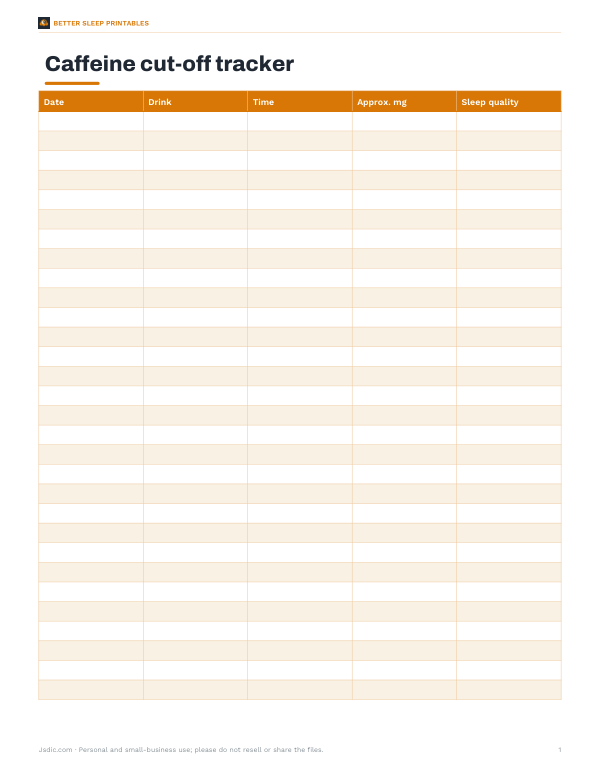 Printable Caffeine Tracker
White, pink and brown noise — what’s the difference?
| Colour | How it sounds | Technical meaning |
|---|---|---|
| White | Bright hiss, like a detuned radio | Equal energy at every frequency |
| Pink | Softer, like steady rain or wind | Energy falls by half per octave (−3 dB per octave), so lower sounds are relatively louder |
| Brown (red) | Deep rumble, like a waterfall or strong wind | Energy falls faster (−6 dB per octave); named after Brownian motion, not the colour |
Many people find pink or brown noise more pleasant for sleep because white noise has a lot of high-frequency hiss. There is no single best colour — try each at a low volume for a few nights.
How sound masking works
Sudden sounds wake us more than steady ones, because the brain notices changes. A constant background sound raises the level of the “floor” against which other noises are heard, so a car door or a dog bark stands out less. This is called sound masking. It doesn’t remove noise, but it makes it less noticeable. Research on noise and sleep is mixed: some studies find that steady background sound helps people fall asleep faster in noisy places, while reviews have called the overall evidence low quality — so treat it as something to try rather than a treatment.
How to use the generator
- Choose a sound: white, pink or brown noise, rain, fan or ocean waves.
- Press Play and set the volume low — it should be quieter than a normal conversation.
- Move the tone slider left for a darker, softer sound or right for a brighter one.
- Set the sleep timer; the sound fades out over the last 30 seconds.
- Keep the tab open and the device awake — some phones pause audio in background tabs.
- Download a 60-second WAV to loop on a speaker or another device.
The sound is generated live in your browser from random numbers, not streamed or recorded, and nothing is uploaded.
Worked example
Someone in a flat on a busy street finds that night buses wake them around 1 a.m. They choose brown noise with the tone slider at about 40%, set the volume just loud enough to soften traffic sounds from the bedroom doorway, and set the timer to one hour so it fades once they are asleep. After a week they switch to pink noise, which they find a little clearer, and download the WAV loop to play on a small speaker so their phone can charge in another room.
Safe volume
Keep sleep sounds quiet. Workplace guidance commonly limits exposure to 85 decibels averaged over eight hours, and a sleep sound should be far below that — around the level of a quiet conversation or less. A useful rule: you should be able to talk quietly over it. Place speakers away from the bed rather than beside your ear, and avoid sleeping with earbuds at high volume.
White noise for babies
Many parents use steady sound to help babies settle. A 2014 study in the journal Pediatrics measured 14 infant sleep machines and found that at maximum volume all of them could exceed the 50-decibel limit recommended for hospital nurseries when placed close to the cot. The researchers advised placing machines as far from the baby as possible, keeping the volume low and not running them for long periods. If you use sound for a baby, set it low, put the device across the room and use the timer.
Other uses
- Focus: masking office chatter while you work or study.
- Tinnitus: some people find background sound makes ringing less noticeable — speak to a doctor or audiologist about tinnitus.
- Privacy: a noise source outside a meeting room makes conversations harder to overhear.
- Pets: steady sound can soften fireworks or storm noise for some anxious pets.
Which sound to choose
| Sound | Try it if… |
|---|---|
| White noise | You need to mask high-pitched sounds such as voices or a TV next door |
| Pink noise | White noise feels too harsh but you want broad masking |
| Brown noise | Low rumbles like traffic or a boiler bother you, or you like a deep, soft sound |
| Rain | You like natural sounds with gentle variation |
| Fan | You are used to sleeping with a fan running |
| Ocean waves | You find slow, rhythmic changes relaxing rather than distracting |
Sleep hygiene basics
Sound is just one part of good sleep. Keep a regular bedtime and wake time, make the bedroom dark and cool, limit caffeine after early afternoon and screens in the last hour before bed. If you regularly struggle to sleep, feel very sleepy in the day or someone notices you stop breathing or snore loudly, talk to a doctor.
Frequently asked questions
Is white noise good for sleep?
Many people find steady background sound helps them fall asleep by masking noises; evidence is mixed, so try it and see.
What is the difference between white, pink and brown noise?
White has equal energy at all frequencies; pink and brown have progressively more low-frequency sound and sound softer.
How loud should white noise be for sleep?
Quiet — below a normal conversation, with the speaker away from the bed.
Does it work offline?
Once the page has loaded, the sound is generated on your device.
Can I download the sound?
Yes, a 60-second WAV file.
Will it keep playing with the screen off?
That depends on your device; some pause background audio. Keep the tab active or use the WAV on a speaker.
What does the tone slider do?
It filters out high frequencies — move it left for a darker, softer sound.